 Austria
 Belgium
 Czech Republic
 Denmark
 Finland
 France
 Germany
 Greece
 Ireland
 Italy
 Latvia
 Luxembourg
 Netherlands
 Norway
 Poland
 Portugal
 Slovakia
 Slovenia
 Spain
 Sweden
 United Kingdom

Decorate your walls with Street Photography for evocative, emotional impact
Street Photography is magnetic and striking and, more than any other photographic style, it has the great gift of telling a story. Discover Pixtury's tips for decorating your walls with the powerful realism and emotional charge of street photography.

Tired of the same old anonymous decor? In this new Pixtury guide, we'll give you a few tips for adding a touch of powerful realism and evocative charge to your walls, drawing inspiration from the Street Photography canvas pictures you'll find in our gallery.
The history and features of Street Photography
Photography is an art with one great strength: telling stories. With its immediacy and spontaneity, Street Photography manages to capture a real-life situation in a single image. It's a photographic style that emerged in the 1930s, when cameras became portable, allowing photographers to use short exposures and get close to their subject, immersing themselves in the decisive moment they were trying to freeze with the camera and hand down to eternity. Because of its strongly metropolitan origins, this kind of photography is widely used in industrial-style interiors.
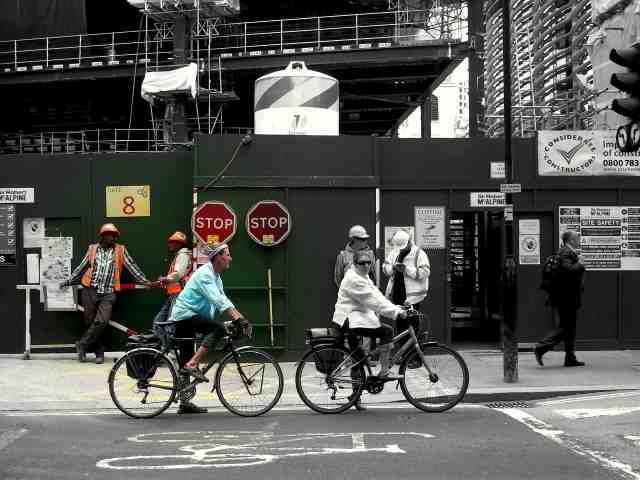
Street photography has no strict rules, but there are a few guiding principles that set it apart. First, the spontaneity of the subject, who is not photographed in a studio or on a constructed set, but captured in the midst of everyday life. The photographer must be discreet, becoming invisible by blending into the surroundings so as not to alter the scene being observed in any way.

The constant presence of people is one of its strengths. The human figure allows viewers to identify with the subject and connect with it emotionally, sensing its feelings, emotions and fears, which makes for striking close-up prints and pictures. The ever-changing life of the city, with its shapes, lights and constant movement, offers countless opportunities. In this respect, black and white images and photos that capture the most meaningful nuances of city life are very popular.

A magnetic kind of photography that speaks for itself and captivates the eye. Decorated with Street Photography, your walls will become the perfect path to an emotional experience that goes beyond mere aesthetic interest. Images like these are perfect for decorating city hotels.
The improvisation and chance nature of a photograph taken on the street make it unique and unrepeatable. Even if you tried to recreate a particular situation, you'd never manage to repeat it in exactly the same way. Contrary to what you might think, photographing on the street is difficult, and there are many obstacles to overcome. Because of the distinctive nature of these shots, this kind of print is ideal when you want to decorate the small spaces of a studio flat, which call for images that quickly grab the viewer's attention.

A first obstacle is having to point the lens at strangers who don't know they're being photographed and might not agree to it. On the other hand, asking permission isn't advisable, as it would compromise the spontaneity of the moment. Another difficulty is the weather. Shooting outdoors, with a portable camera and no bulky equipment, you face all the problems of poor light, the time of day and the changing seasons. It's important to find the right balance between ISO sensitivity, aperture and exposure time. Whatever the light conditions, they can contribute to the emotional involvement that is a fundamental part of this photographic style. In the Pixtury gallery, you'll find a wealth of images to give you original ideas for decorating on a budget.

Henri Cartier-Bresson: a look at the past
To photograph is to recognise, simultaneously and within a fraction of a second, both the fact itself and the rigorous organisation of visually perceived forms that give it meaning. It is putting one's head, one's eye and one's heart on the same axis. It is a way of life.
Henri Cartier-Bresson
One of the leading figures of Street Photography is Henri Cartier-Bresson. His name is linked to that of a camera: the Leica. Small and easy to handle, it's perfect for taking pictures without being seen. A 35mm camera that can take around thirty shots before it needs reloading. From the 1930s onwards, it became the camera of choice for reporters in emergency situations, thanks to its versatility and speed. These qualities perfectly embody the style of Cartier-Bresson, who had no interest in posed, static shots and preferred the spontaneous action of his subjects. The discretion of a Leica ensured that the scene was neither disturbed nor altered by his presence, allowing him to capture the "decisive moment". Two words that sum up his ethos. The dazzling force of life and the immediacy of everyday scenes were all that interested him, because they allowed him to "fix eternity in an instant". His photographs ooze life and evoke feelings, love and fear. They don't aim for mere aesthetic beauty but for revealing the mystery of life. If you have any questions, feel free to get in touch, and remember that you can buy the prints we've shown you in this guide in our gallery.